What Is EVA Footwear? Benefits, Uses and How to Choose the Right Pair
Footwear is an essential part of everyday life. Whether you are getting ready for a relaxed day at home, stepping outside for a quick errand, travelling or enjoying time outdoors, the right pair should offer a practical balance of comfort, design and everyday usability.
One material that has become widely used in casual footwear is EVA. From lightweight slippers and flip-flops to sliders and moulded clogs, EVA is valued for its distinctive material properties and versatility.
At APL Footwear, our product portfolio includes footwear styles for men, women and children. Understanding the material behind a product can help buyers make more informed choices based on their daily routines and preferences.
What is EVA?
EVA stands for ethylene-vinyl acetate, a polymer used in a variety of products, including footwear components.
In footwear applications, EVA is valued for its lightweight feel, flexibility and cushioning characteristics. Depending on the formulation, construction and moulding process, EVA can be used to create footwear in a variety of shapes, colours and designs.
These characteristics make EVA suitable for a broad range of casual footwear applications. However, the performance of a finished product depends on more than its material alone. Design, fit, thickness, surface texture and manufacturing quality also matter.
5 things to know about EVA footwear
1. Lightweight construction
One of EVA’s most recognised characteristics is its relatively low weight. Lightweight footwear can be practical for daily routines, travel and situations where easy movement is important.
When comparing products, consider the overall construction and fit rather than weight alone.
2. Flexible feel
EVA formulations can provide flexibility, helping footwear accommodate natural movement during ordinary activities.
The amount of flexibility varies between designs. A suitable pair should feel comfortable for its intended use without feeling unstable or poorly fitted.
3. Cushioning characteristics
EVA can be formulated to provide a soft, cushioned feel underfoot. This is one reason it is used in different types of footwear, including casual sandals and footwear midsoles.
Cushioning is not the same as medical or orthopaedic support. Anyone requiring specialised support should choose a product designed for that purpose.
4. Versatile designs
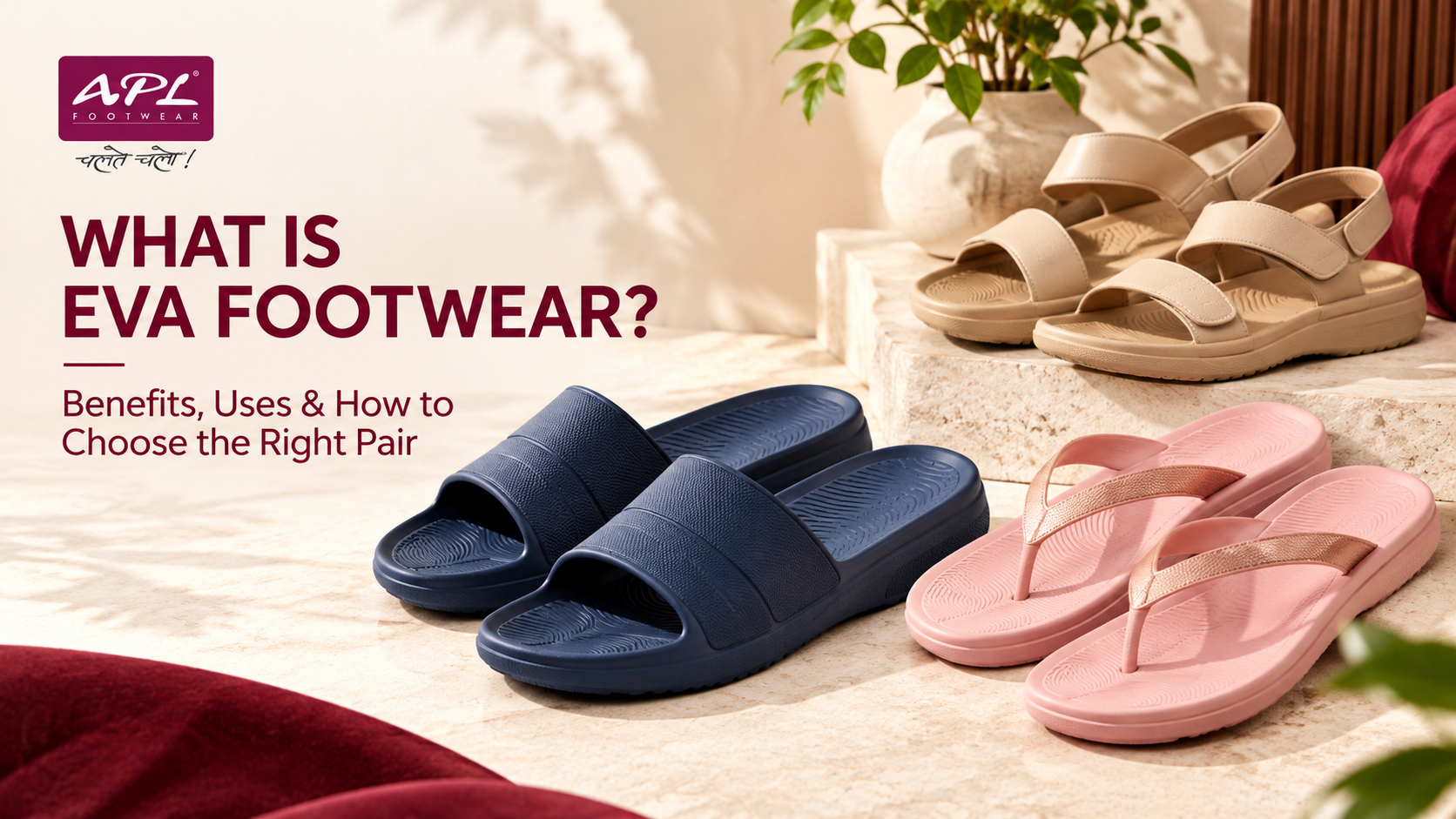
EVA footwear can be produced in a wide variety of shapes, textures and colours.
Depending on the product range, this can include:
- Everyday slippers
- Open-toe sliders
- Flip-flops
- Casual sandals
- Moulded clogs
- Selected footwear components and soles
The material’s adaptability gives manufacturers opportunities to create different looks for different age groups and preferences.
5. Practical maintenance
Many EVA footwear products are relatively straightforward to clean. The appropriate method depends on the specific design, surface finish and any additional components.
As a general precaution, avoid harsh chemicals, excessive heat and prolonged exposure to direct sunlight. Always follow the manufacturer’s care instructions.
How is EVA footwear manufactured?
The manufacturing process varies by footwear type, but a typical moulded EVA product may involve the following stages.
Material preparation: The appropriate material formulation is prepared for the intended application.
Moulding: Material is processed using suitable equipment and moulds to create the required shape.
Finishing: Excess material and surface imperfections are addressed according to the product’s construction.
Inspection: Products are checked against applicable specifications and quality requirements.
Packaging: Approved finished products are prepared for storage and distribution.
Each stage contributes to the consistency of the final product. Exact processes and quality checks differ between manufacturing methods and individual footwear designs.
EVA footwear for men, women and children
Different consumers have different design and functional preferences.
Men’s footwear: Sliders, flip-flops and everyday sandals can offer simple styling for casual use.
Women’s footwear: A broader mix of colours, silhouettes, decorative details and sandal styles provides options for different preferences.
Kids’ footwear: Colourful clogs, sandals and casual styles can suit everyday family routines. Fit, age-appropriate construction and the intended activity remain important considerations.
APL Footwear’s catalogues can help visitors explore the styles available within these categories.
Frequently asked questions
Is EVA footwear lightweight?
EVA is commonly used in lightweight footwear designs, although the actual weight depends on the product’s size, construction and material formulation.
Is EVA footwear waterproof?
Water resistance depends on the specific product construction. Some moulded EVA footwear is suitable for wet environments, but this should not be assumed for every product.
How should EVA slippers be cleaned?
Follow the product’s care instructions. For many simple designs, gentle cleaning with water and mild soap may be appropriate; avoid excessive heat.
Is EVA footwear suitable for every activity?
No. Select footwear based on the intended activity, fit, traction and support requirements.
Conclusion
EVA has become a useful material in casual footwear because of its lightweight feel, flexibility and versatility. Understanding these characteristics makes it easier to compare products and identify a style suited to your needs.
APL Footwear brings together a range of footwear styles for men, women and children. Explore the product catalogue to discover options for everyday wear and learn more about the manufacturing capabilities behind the range.